Moss & Mortar
1. Silhouette Exploration
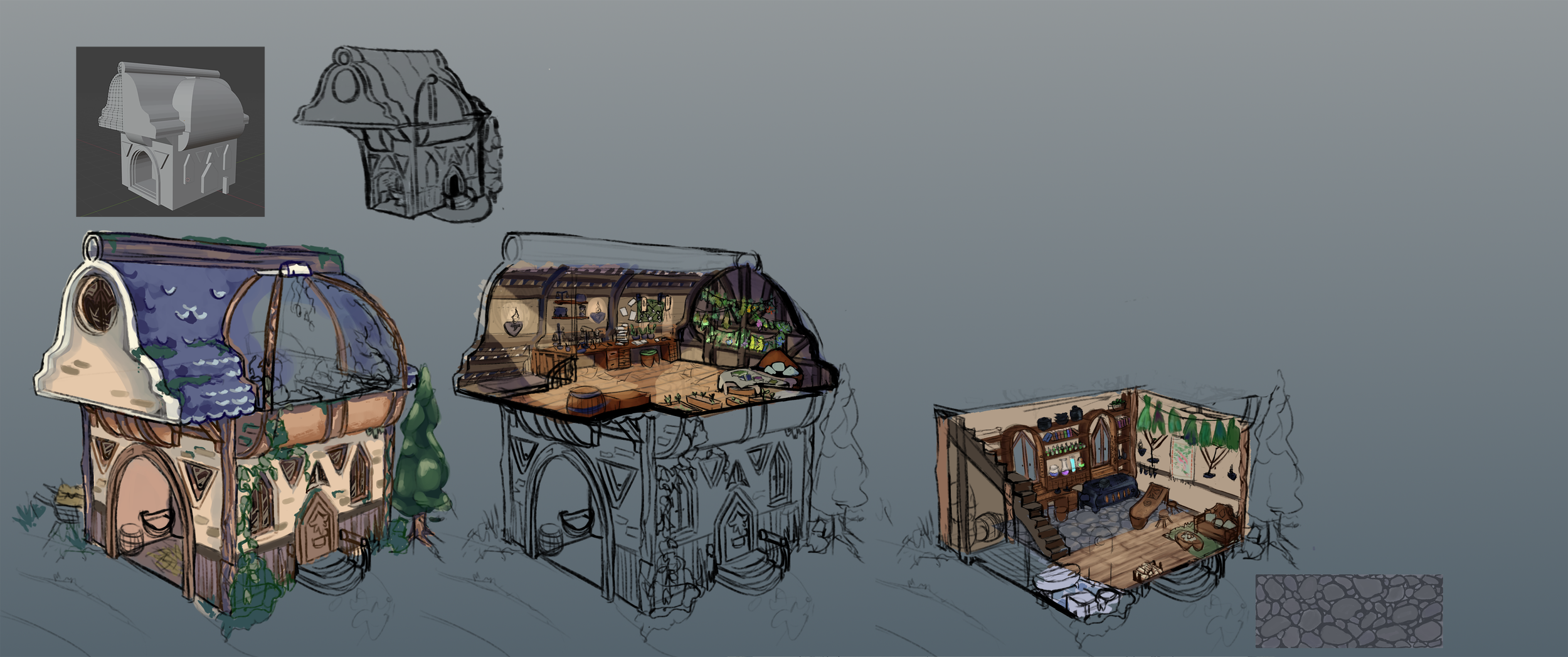
The process began with silhouette studies to establish strong, readable shapes for the environment. This stage focused on proportion, negative space, and overall structure rather than detail, allowing for quick iteration and exploration of different apothecary layouts.
The development of Moss & Mortar followed an iterative workflow that moved from broad exploration into refined execution, balancing visual design with spatial accuracy.

2. Sketch Refinement
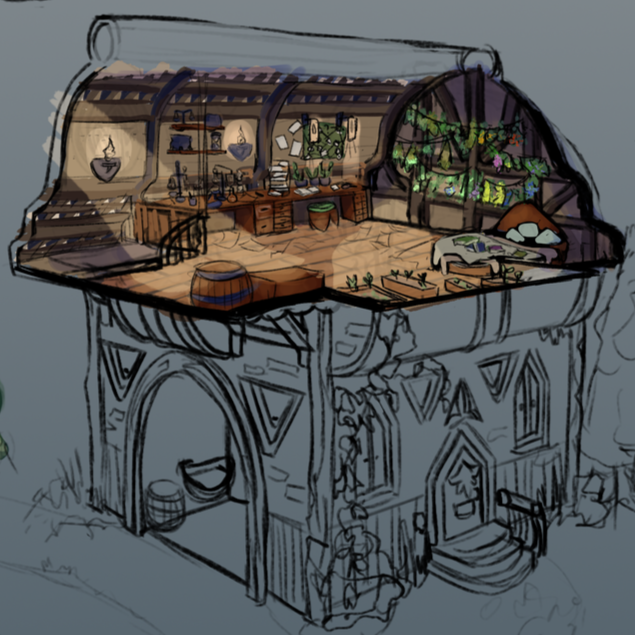
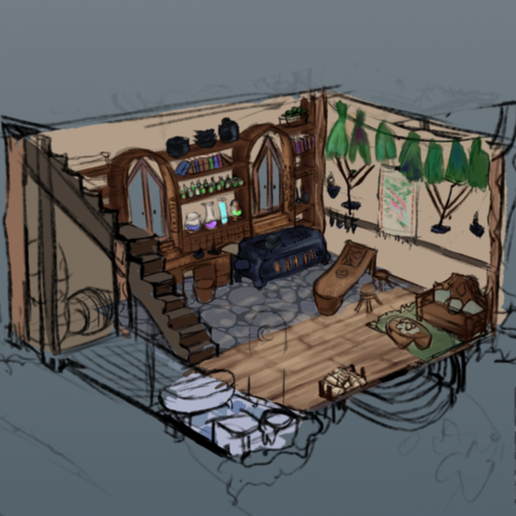
Selected silhouettes were developed into more detailed sketches. At this stage, structural elements and key props were introduced, including shelving, workstations, and architectural features. The goal was to refine the design language while maintaining the clarity established in the silhouette phase.

3. 3D Blockout (Proportion Pass)
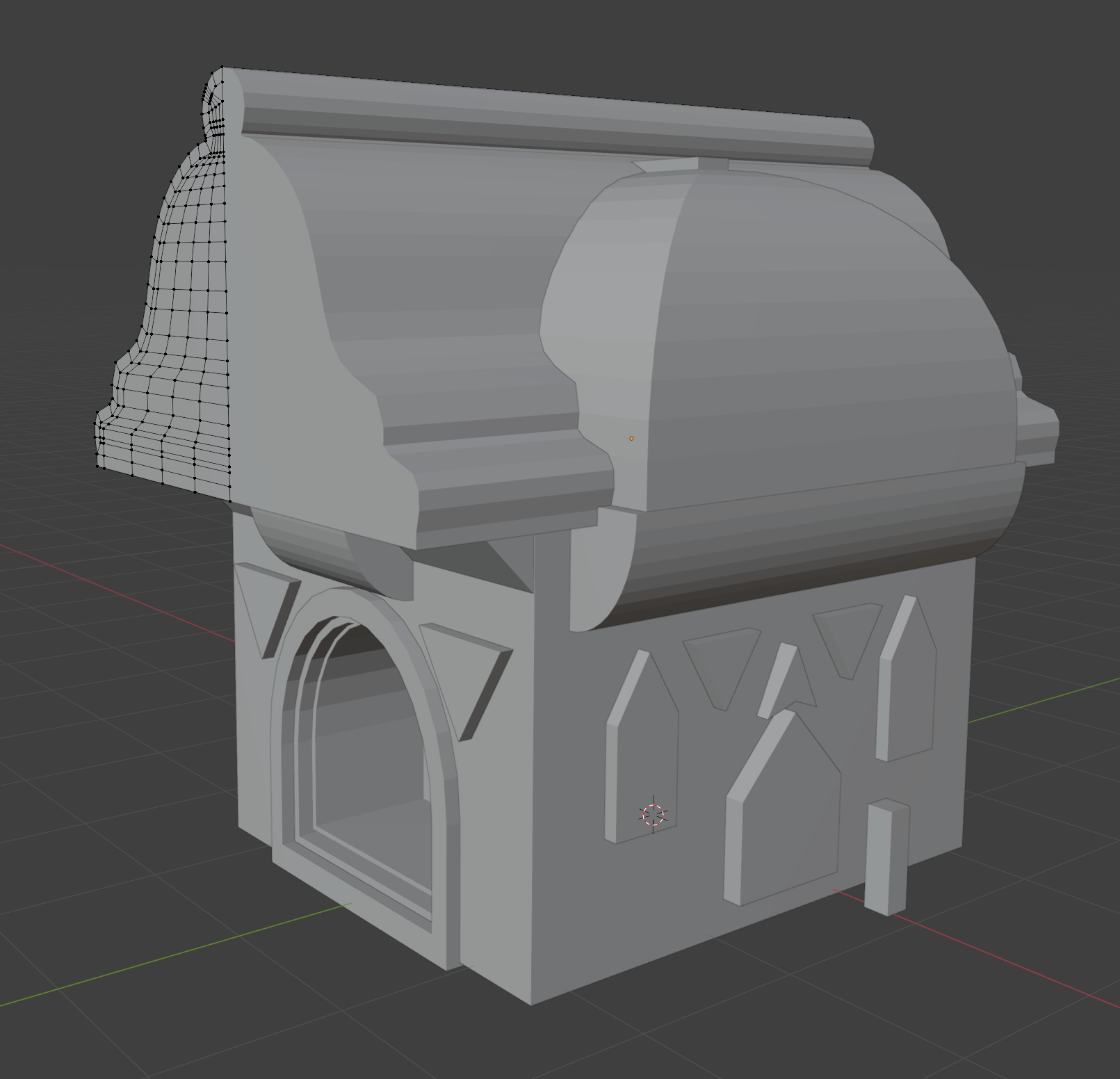
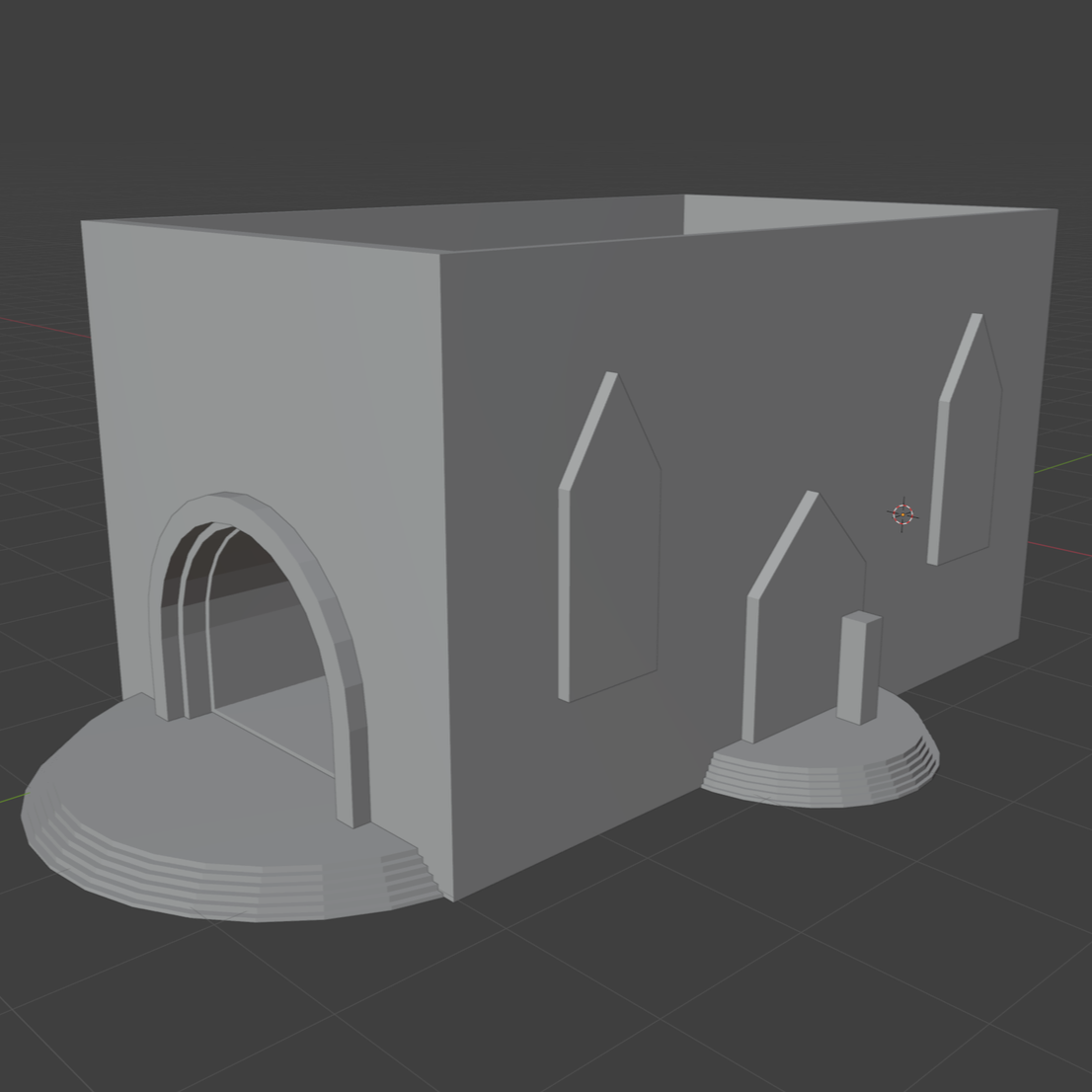
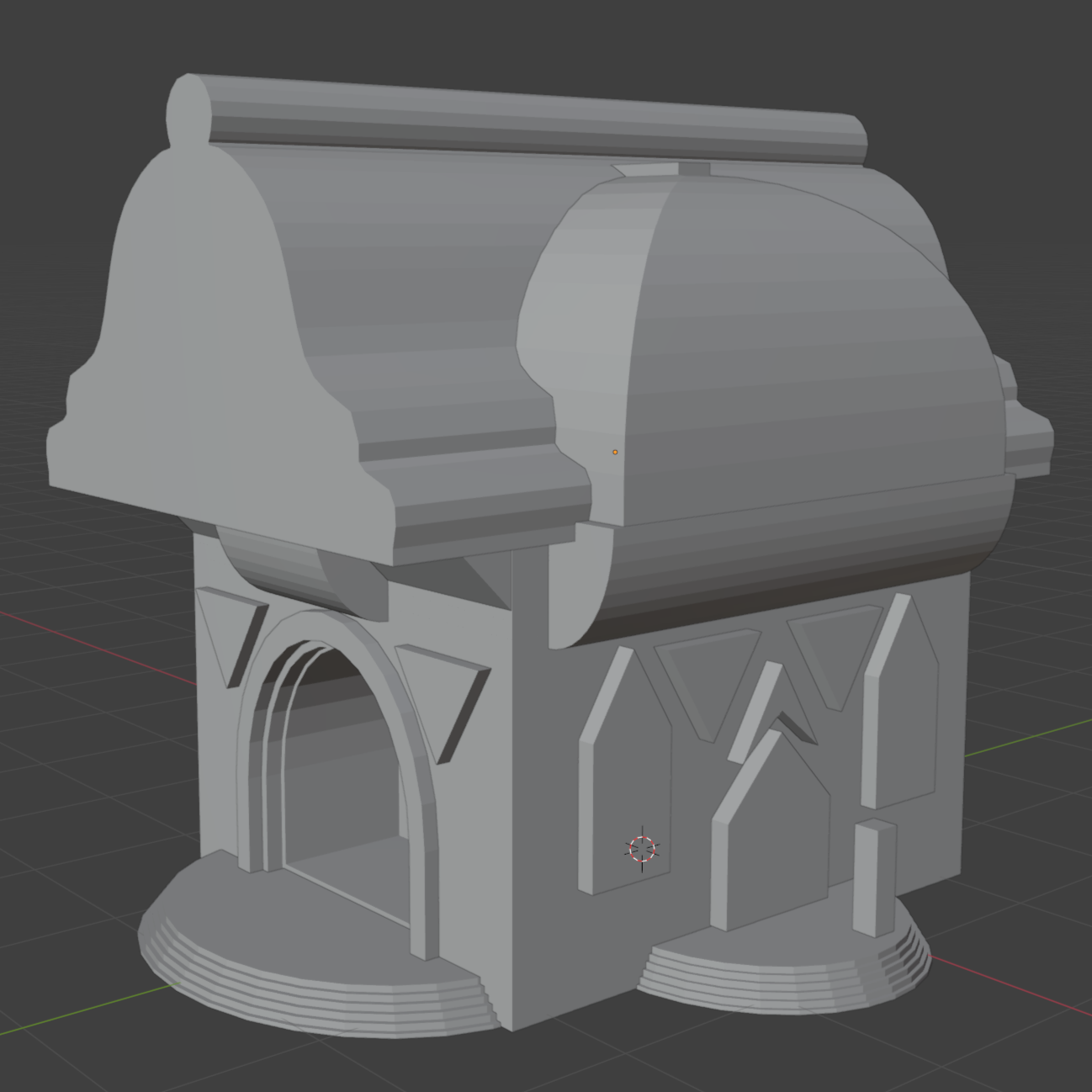
A simplified 3D mockup was created in Blender to validate proportions and spatial relationships. This blockout ensured that the environment functioned correctly in three dimensions and helped identify any scale or layout issues early in production.
4. Color and Material Development
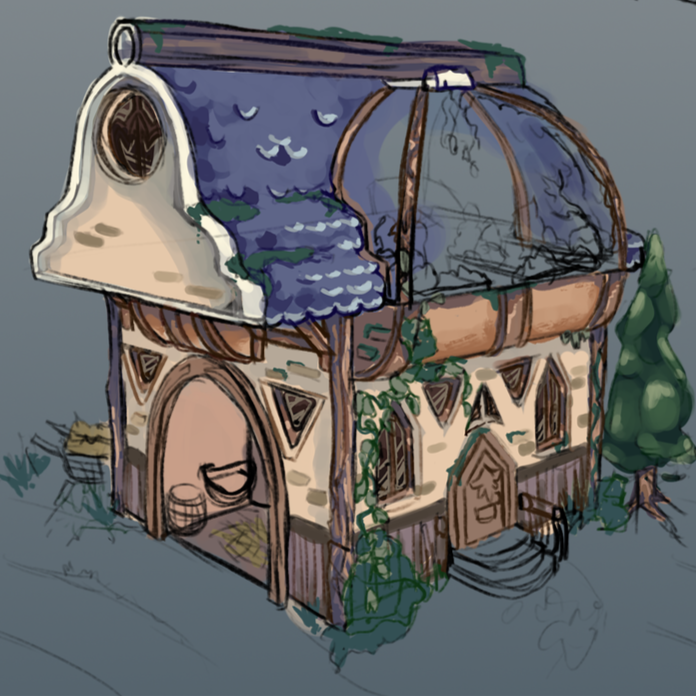
After confirming the structure, color palettes and material definitions were established. This included testing combinations of wood, moss, glass, and metal to support the mood of an abandoned yet lived-in apothecary. Lighting direction and atmosphere were also considered during this phase.


5. Final Rendering and Detail Pass
The final stage focused on bringing the environment to life through detailed modeling, texturing, and rendering. Geometry nodes were used for procedural elements like roof tiles, while particle systems distributed moss, grass, and foliage. Custom shaders and vector painting allowed for controlled variation across surfaces. Final touches included lighting adjustments, emissive elements, and environmental storytelling details.