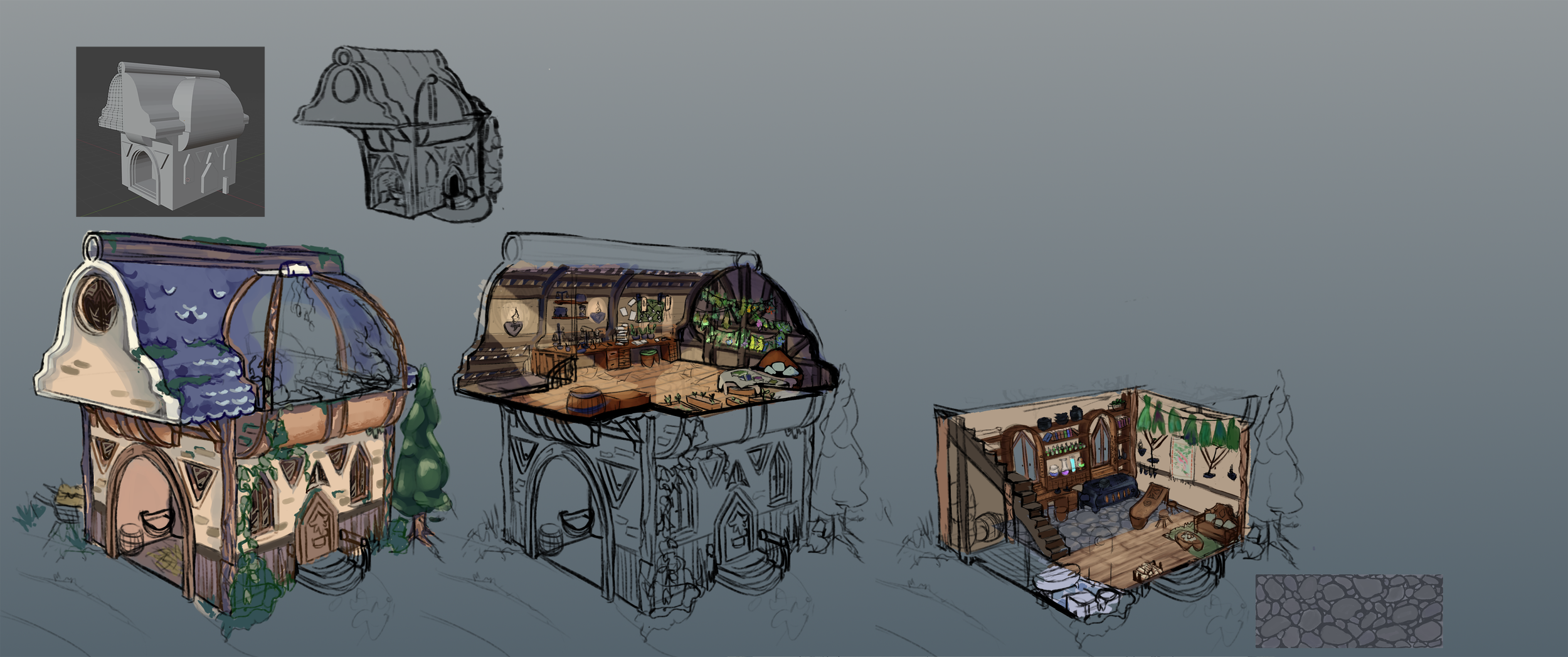
Moss & Mortar
Moss & Mortar — Technical Breakdown
This environment was created in Blender with a focus on non-destructive workflows, modular construction, and efficient asset creation for production use.
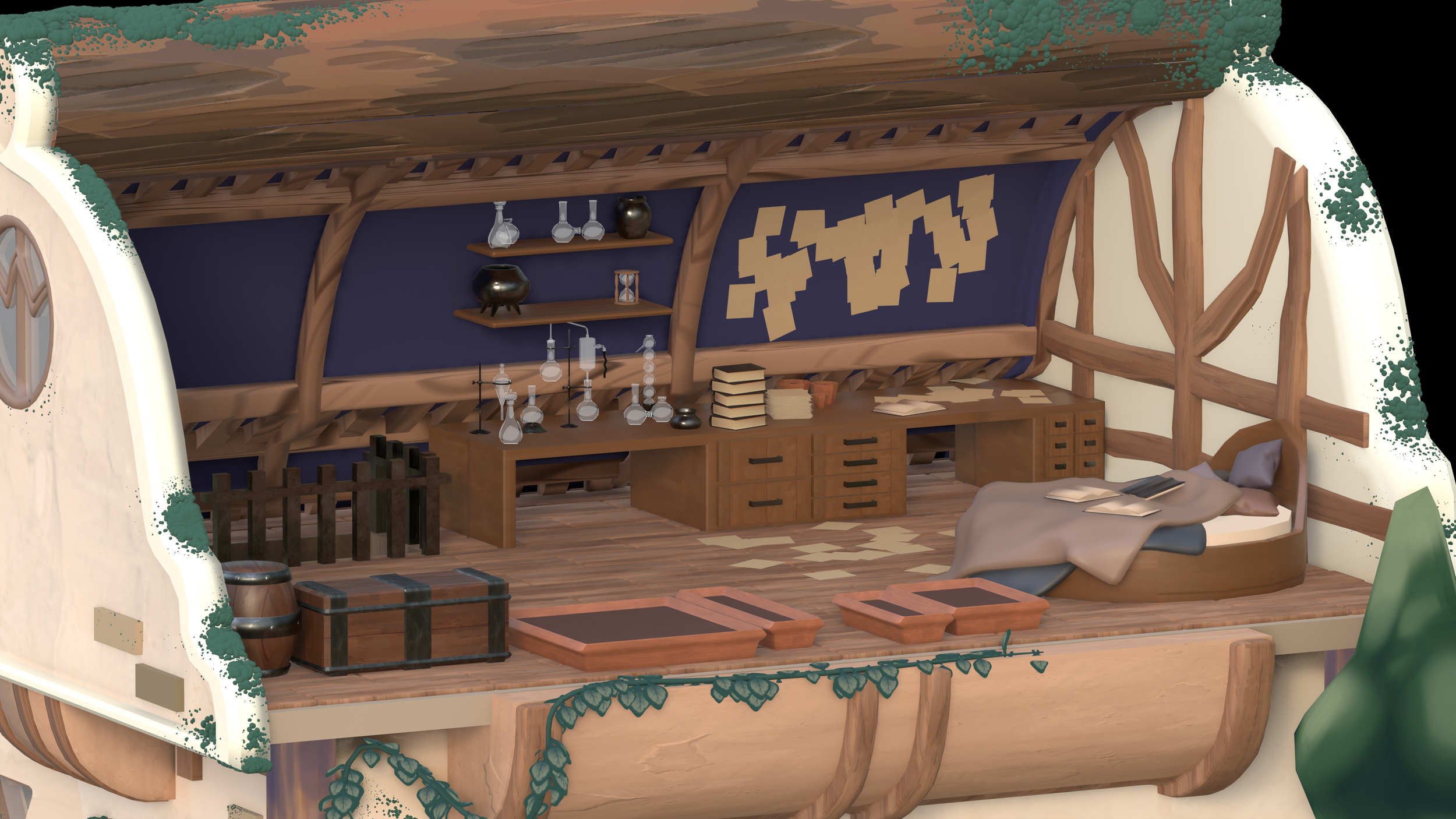
The roof tiles were built using Geometry Nodes to generate a procedural system rather than manually placing individual pieces. This setup instances tiles across the roof with controlled variation in rotation, scale, and offset, allowing for quick iteration while maintaining consistency. Because the system is procedural, adjustments to density, spacing, or overall shape can be made without rebuilding the asset.
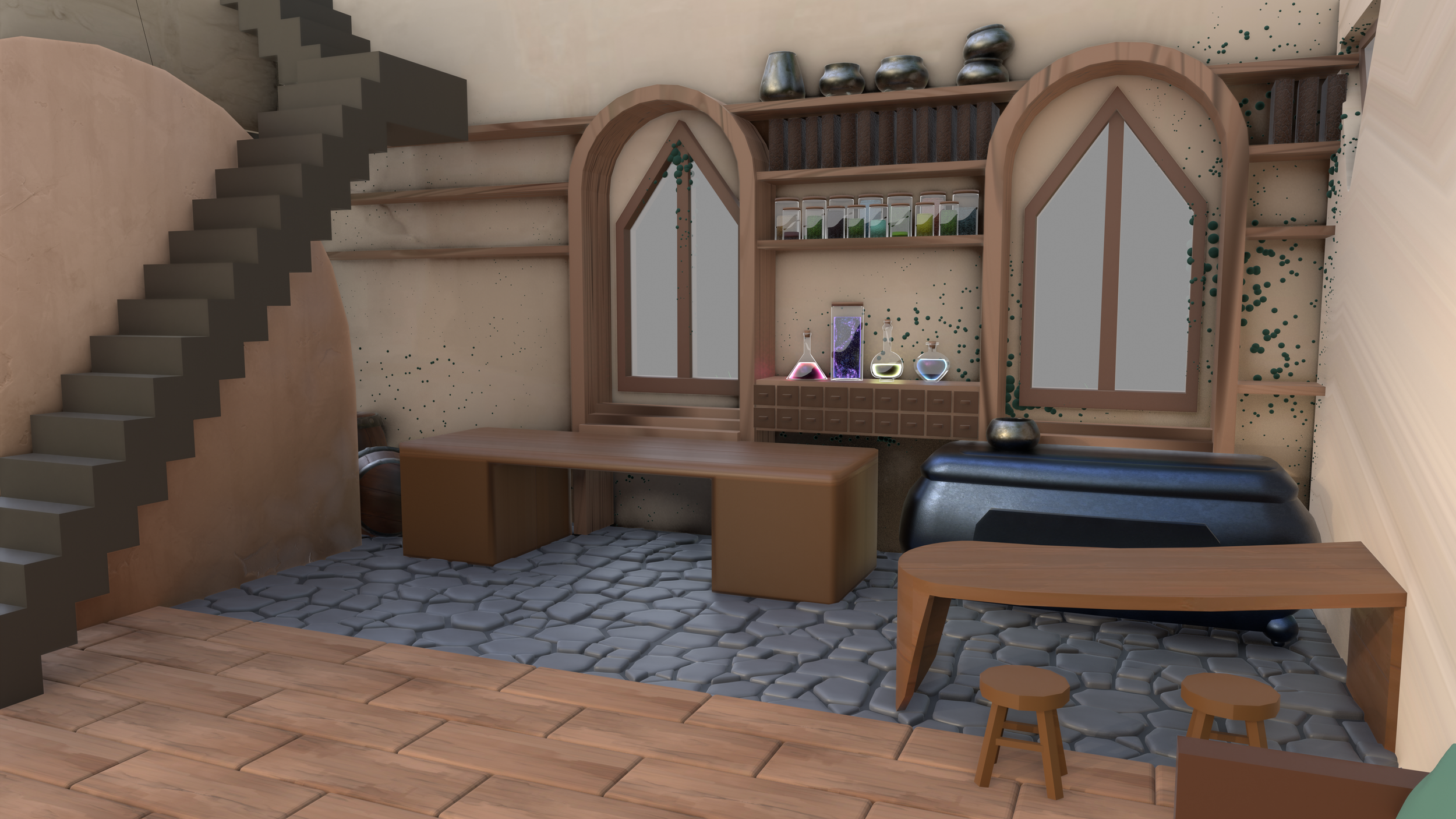
Foliage was created using particle systems for moss, grass, bushes, and vines. Vertex painting was used to define placement areas, making it easy to art-direct where growth appears. This allowed me to push moss and grass into crevices, edges, and shaded zones while keeping paths and high-traffic areas more exposed. The use of painted masks also made it easy to adjust distribution and variation without reworking the underlying setup.
Array modifiers were used to construct repeating elements such as siding and decorative trims. This approach kept the model clean and scalable while maintaining consistent spacing. After establishing the base structure, small variations were introduced to reduce repetition and better integrate with the organic elements.
Materials were built using custom node-based shaders in Blender. These shaders incorporate layered textures, roughness variation, and color breakup to add surface detail without relying on heavy geometry. Subtle gradients and variation help unify the asset while maintaining visual interest across different materials.